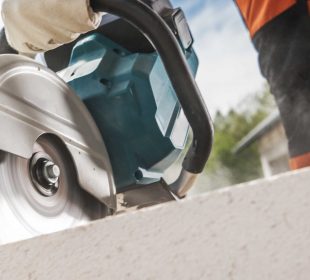
A concrete saw is the better rental when you need a clean, controlled cut through a slab, and a jackhammer is the better rental when you need to break concrete apart for removal. Many demolition jobs use both, with the saw cutting the boundary and the jackhammer breaking up everything inside it.
TRS Equipment Rental has supplied Tucson contractors and homeowners with concrete equipment since 1987, from small patio repairs to full slab removals. The concrete equipment lineup includes an 18-inch walk-behind concrete saw, a 14-inch handheld cut-off saw, Bosch electric jackhammers and breakers, a 40-pound air jackhammer and rotary hammers.
What is the difference between a concrete saw and a jackhammer?
The difference comes down to how each tool removes concrete. A concrete saw uses a spinning diamond blade to cut a defined line, while a jackhammer uses repeated impact to fracture the material.
That makes the finished result the easiest way to decide. If the edge that’s left behind needs to be straight and clean, start with a saw. If the goal is to break concrete into pieces you can haul away, a jackhammer does that job far faster than any saw.
When should you rent a concrete saw?
Rent a concrete saw when the project calls for a controlled cut through concrete, masonry or pavers. Common uses include cutting out a section of driveway or sidewalk, opening a slab for plumbing or electrical work and cutting control joints in new flatwork.
The two saws suit different situations. The 18-inch walk-behind saw rolls along the slab, which keeps long straight cuts steady and takes much of the strain off the operator. The 14-inch handheld cut-off saw is lighter and easier to maneuver, so it works better for short cuts, vertical surfaces, tight corners and spots a walk-behind can’t reach.
Blade size limits cutting depth. A 14-inch saw typically cuts around 5 inches deep, and an 18-inch walk-behind cuts deeper, which matters on thicker driveways and slabs. If the concrete is thicker than the blade can reach, cut as deep as the saw allows and let the jackhammer finish the break along that line.
Before cutting any slab inside or next to a house, find out whether plumbing, electrical conduit or post-tension cables run through it. Cutting into a post-tension cable can be dangerous, so if you’re unsure, have the slab checked by a qualified professional first.
When should you rent a jackhammer?
A jackhammer is the right rental when you need to fracture and remove concrete rather than cut it precisely. Typical jobs include breaking up a cracked patio, removing an old sidewalk and demolishing a slab for a new pour.
TRS offers Bosch electric jackhammers in 35-pound and 65-pound sizes along with a 40-pound air jackhammer. The weight class affects both the job it can handle and how it feels to use:
- 35-pound electric: lighter demolition, thinner slabs, small repairs and work on walls or overhead surfaces where a heavy hammer would be hard to control.
- 65-pound electric breaker: thicker slabs, driveways and tougher concrete where you need more impact per blow. It works best breaking downward and lets the tool’s weight do the work.
- 40-pound air jackhammer: a strong option when you already have a compressor on site, common on contractor jobs.
Electric models only need a properly rated power source, which makes them convenient for homeowners. An air jackhammer needs an air compressor that can supply enough airflow, so confirm that piece before you plan around it.
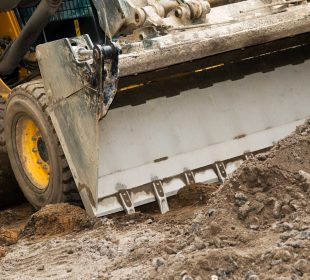
For large slabs, a skid steer or mini excavator with a hydraulic breaker attachment can break concrete much faster than a handheld tool.
Should you use a concrete saw and jackhammer together?
For most partial slab removals, yes. Cutting the perimeter first controls where the concrete breaks, which protects the sections you’re keeping. Breaking with impact alone can send cracks into the surrounding slab and leave a ragged edge that’s hard to pour against.
Say you’re replacing one damaged section of a driveway. Saw-cut the outline, then jackhammer the section inside the cut into pieces small enough to lift. On a larger demolition, cutting the slab into a grid first can make the pieces more manageable to break and haul.
Which tool is right for common concrete jobs?
| Concrete job | Better rental | Why |
| Straight cut through a slab | Concrete saw | Controlled, clean edge |
| Removing one section of sidewalk | Saw and jackhammer | Cut the boundary, then break inside it |
| Breaking up a damaged patio | Jackhammer | Built for fracturing concrete |
| Replacing a driveway section | Saw and jackhammer | Protects the concrete you keep |
| Demolishing a thick or reinforced slab | 65-pound breaker or a breaker attachment | More impact for tougher material |
| Opening a slab for plumbing | Concrete saw | Precise opening with minimal damage |
Reinforcement changes the job, too. Rebar or wire mesh won’t break with the concrete, so plan on cutting it free as pieces come apart.
How thick does concrete need to be before you need a breaker?
There’s no single cutoff. Thickness, reinforcement, total area and the hardness of the concrete all play a role. As a general guide, a lighter electric jackhammer handles thin, unreinforced flatwork like a small walkway, while thicker driveways and reinforced slabs go faster with a heavier breaker.
If a tool is undersized for the concrete, the work gets slower and much harder on the operator. Telling the TRS team the slab’s thickness and whether it’s reinforced is the quickest way to land on the right size.
What does OSHA require for dust control when cutting or breaking concrete?
Cutting and breaking concrete releases respirable crystalline silica, and OSHA’s construction silica standard, 29 CFR 1926.1153, sets out specific controls for these tasks. For handheld and walk-behind saws, Table 1 calls for an integrated water system that continuously feeds water to the blade. For jackhammers and chipping tools, it calls for either continuous water at the point of impact or a shroud with a dust collection system.
Some tasks also call for respiratory protection depending on the setting and how long the work lasts. Contractors covered by the standard have additional obligations, including a written exposure control plan.
Homeowners aren’t covered by that standard, but the dust is just as harmful. Wet cutting, keeping others away from the work area and wearing a properly fitted respirator are worth doing on any concrete job. Ask TRS about the dust control features on the equipment you’re renting and how to set them up.
What safety precautions should you take when cutting or breaking concrete?
Follow the manufacturer’s guidelines for each tool and wear proper PPE, including eye and hearing protection, gloves, steel-toe boots and respiratory protection suited to the task. TRS provides operator training at pickup or delivery, which is a good time to ask how the saw’s water feed works or how to handle a heavy breaker.
Set up a controlled work zone so people and pets stay clear of flying chips and shifting slabs. If the job extends below the slab into digging or trenching, contact Arizona 811 to have underground utilities marked before you start.
In Tucson summers, plan heavy demolition for early morning. Running a jackhammer in afternoon heat is exhausting, and TRS opens at 6:30 AM so you can pick up equipment and get started before temperatures climb. The jobsite safety guide covers more of the basics.
What should you plan for before renting demolition equipment?
A few details will shape what you rent:
- How thick is the concrete, and is it reinforced?
- Do you need a clean edge, full removal or both?
- How large is the area?
- Can the equipment reach the work site?
- How will you haul broken concrete away?
That last question gets overlooked. Broken concrete is heavy, and a dump trailer can save a lot of trips. If you’re pouring new concrete afterward, a compactor helps prepare the base.
How do you rent a concrete saw or jackhammer from TRS?
Call 520-744-6333 or request a quote online. Let the team know the concrete’s thickness, whether it’s reinforced, how much needs to come out and the result you’re after, and they’ll match you with the right saw, jackhammer or combination. TRS has no deposit and no reservation fees, and delivery is available throughout Tucson and rural Southern Arizona.
TRS Equipment Rental is at 7255 N. Camino de Oeste near Ina Road and I-10, open Monday through Friday from 6:30 AM to 3:00 PM. You can also check availability through the online rental portal.
Frequently Asked Questions
Can a jackhammer cut concrete cleanly?
No. A jackhammer fractures concrete, and the break can travel past the point where the bit hits. Use a concrete saw when you need a defined edge.
How deep can a rental concrete saw cut?
Cutting depth depends on blade diameter. A 14-inch handheld saw typically cuts around 5 inches deep, and an 18-inch walk-behind saw cuts deeper. For thicker slabs, cut as deep as the saw allows and break the rest with a jackhammer.
Do I need an air compressor to use an air jackhammer?
Yes. An air jackhammer runs on compressed air, so you’ll need a compressor that delivers enough airflow for the tool. Electric jackhammers only need a properly rated power source.
Should I cut concrete wet or dry?
Wet cutting is the safer choice in most situations because water suppresses silica dust at the blade. OSHA’s Table 1 controls for saws are built around continuous water delivery.
What size jackhammer is best for a residential patio?
For a typical unreinforced patio, a 35-pound electric jackhammer can work for thinner sections, while a 65-pound breaker moves faster through thicker or reinforced concrete. Slab thickness is the deciding factor.