For most monsoon storm cleanup in Tucson, a skid steer handles debris and loose soil while a mini excavator takes on erosion and washouts. Once the heavy material is moved, a trailer hauls it off, a compactor firms up repaired ground and a pressure washer clears mud from concrete.
TRS Equipment Rental has served contractors, landscapers, property managers and homeowners in Tucson and Southern Arizona since 1987, and storm cleanup is one of the jobs we see most after a big monsoon. The right machine depends on what the storm left behind, so matching equipment to the task keeps you from renting more machine than the job needs. You can browse the full lineup on our rental equipment page.
Tucson’s monsoon officially runs from June 15 through September 30, and the City of Tucson staged more than 500 barricades at dip crossings this year to prepare for flooding. Even after the season ends, a lot of properties are still dealing with washed-out driveways, eroded slopes and mud-caked patios. Fall is a good window to repair that damage before next summer’s storms arrive.
What equipment should you rent for monsoon storm cleanup in Tucson?
Start with the damage, then pick the machine. Here’s how common cleanup tasks line up with equipment:
| Cleanup task | Equipment to rent |
| Branches, rocks and loose soil | Skid steer with a bucket or grapple |
| Erosion, washouts and regrading | Mini excavator |
| Hauling debris off the property | Dump trailer |
| Moving rented machines between sites | Equipment trailer |
| Firming up repaired base material | Compactor |
| Mud on driveways, patios and walls | Pressure washer |
Many cleanups need more than one of these. A common sequence is to clear debris with a skid steer, repair eroded areas with a mini excavator, haul material out and finish with compaction and washing.
How can a skid steer help with storm debris cleanup?
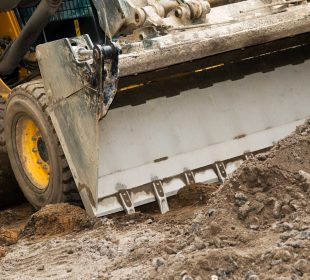
A skid steer moves in minutes what would take hours with a wheelbarrow. After a monsoon, that usually means downed branches, rocks carried in by runoff, piles of displaced soil and general yard debris.
TRS rents Bobcat skid steers from the compact S70, which has a 700-pound rated operating capacity, up to larger production machines. The compact models fit through tighter backyard gates and around homes, while the larger machines make sense for commercial lots or big properties with heavy material.
The attachment matters as much as the machine. A grapple grabs brush and branches that a bucket would struggle to hold, and a sweeper clears mud and gravel off paved areas. TRS also offers buckets, pallet forks and hydraulic breakers through its skid steer attachments lineup. For more ideas, see our post on Tucson projects where a Bobcat rental shines.
When should you rent a mini excavator after a monsoon storm?
Rent a mini excavator when runoff has cut into the ground. Washouts along driveways, gullies on slopes, undermined walkways and clogged drainage swales all call for digging and reshaping rather than just scooping.
That’s especially true in Tucson, where caliche and hard-packed soil make hand digging slow. TRS rents Kubota and Yanmar mini excavators from about 1-ton compact units up to 6-ton machines, and a hydraulic breaker from our mini excavator attachments can help when you hit caliche.
A smaller machine works well around houses and backyards with limited access. Larger machines make sense for long washouts, access roads or heavier site restoration on contractor jobs.
Before you dig, contact Arizona 811. Erosion repair, regrading and drainage work all count as digging, and runoff can change the ground over buried lines. Arizona 811 will arrange to have underground utilities marked before you start.
What equipment helps move storm debris off a property?
A storm cleanup can produce far more material than a pickup bed can hold. TRS offers both dump trailers and equipment trailers in Tucson.
A dump trailer handles soil, gravel, decomposed granite, yard waste and broken concrete, and it unloads without shoveling. An equipment trailer moves a skid steer or mini excavator between properties, which helps contractors and property managers working several sites after the same storm.
Before loading, check the trailer’s rated capacity and confirm your tow vehicle is rated for the loaded weight. Wet soil weighs considerably more than dry soil, so a load that looks modest can be heavier than you’d expect.
How can a compactor help after flood and erosion damage?
Once damaged material is removed and replaced, a compactor firms up the new base under walkways, driveways, pavers and landscaping. TRS carries Multiquip compactors for these jobs.
Timing is the key. Compacting saturated soil doesn’t fix it, and it can trap the problem under a surface that looks finished. Let the area dry, dig out mud or material that won’t compact properly and bring in suitable fill or aggregate before compacting.
Can a pressure washer help clean up after a monsoon storm?
Yes. After floodwater is gone and the area is safe, a pressure washer removes dried mud and silt from driveways, patios, equipment and building exteriors. TRS rents Honda-powered hot and cold water units from 3,000 to 4,000 PSI.
Cold water handles most mud. Hot water helps when the mess includes oil, grease or residue washed onto concrete from a driveway or equipment yard. On stucco, painted surfaces or wood, start with a wider tip and test a small area, since high pressure can damage softer finishes or push water where it doesn’t belong.
If thick layers of soil have settled on a surface, move the bulk of it with a skid steer and sweeper first. The pressure washer is the finishing step.
What should you check before renting storm cleanup equipment?
Walk the property and answer a few questions before you call:
- How much debris needs to be removed, and what kind is it?
- Has soil washed away or piled up somewhere it doesn’t belong?
- How wide are the gates and access points?
- Will the debris need to be hauled off site?
- Will any area need regrading or compaction after cleanup?
- Are hard surfaces coated with mud?
Those answers usually point to the right mix of machines. Contractors restoring multiple sites can also ask about weekly or monthly rates, and TRS delivers throughout Tucson and rural Southern Arizona. Homeowners don’t need a commercial account to rent.
Is it safe to start cleanup right after a storm?
Not always. Wait until flood conditions have fully cleared, and never drive or operate equipment through flowing water. The City of Tucson warns that all low-lying areas can flood during monsoon storms and asks drivers never to go around barricades.
Saturated ground is its own hazard. Heavy equipment can sink, slide or tip on soft soil, and floodwater can hide washed-out pavement and buried debris. If the property has downed power lines, electrical hazards, structural damage or contaminated water, bring in the right professionals before any equipment goes to work.
When you’re ready to run a machine, follow the manufacturer’s guidelines, wear proper PPE and take advantage of the operator training TRS provides at pickup or delivery. Our jobsite safety guide covers more of the basics.
How do you rent storm cleanup equipment from TRS?
Call 520-744-6333 or request a quote online. Tell the team what the storm damaged, how much material you need to move and what access looks like, and they’ll help you choose the machine and attachment that fit. TRS has no deposit and no reservation fees, and delivery is available throughout Tucson and rural Southern Arizona.
TRS Equipment Rental is at 7255 N. Camino de Oeste, near Ina Road and I-10, and is open Monday through Friday from 6:30 AM to 3:00 PM. Answers to general questions about rental terms, delivery and extensions are in the FAQ on our homepage.
Frequently Asked Questions
What equipment do I need to clean up after a monsoon storm in Tucson?
A skid steer is the most versatile choice for moving debris, rocks and loose soil. Add a mini excavator for erosion or washouts, a dump trailer for hauling and a pressure washer for mud on hard surfaces.
How long should I wait before using heavy equipment on storm-soaked ground?
Wait until standing water is gone and the ground is firm enough to support the machine without rutting or sinking. That can take anywhere from a day to much longer, depending on soil, shade and drainage. If your boots sink in, the ground is too soft for heavy equipment.
Do I need to call 811 before repairing erosion damage?
Yes. Regrading, filling washouts and digging drainage all involve disturbing the ground, so contact Arizona 811 to have underground utilities marked before you start.
Should I use hot or cold water to pressure wash monsoon mud?
Cold water removes most mud and silt. Hot water is more effective when mud is mixed with oil, grease or other residue, which is common on driveways and in equipment yards.
When does Tucson’s monsoon season end?
The official monsoon season in Tucson runs from June 15 through September 30. Storm damage often lingers after that, which makes fall a good time for erosion repair and regrading before the next season.