For a few post holes or a small planting area, soaking the caliche and breaking it with a rotary hammer or jackhammer is usually enough. For trenches, footings and larger digs, a mini excavator with a toothed bucket handles most caliche, and a hydraulic breaker takes over when the layer is too hard to dig. A backhoe adds weight and reach for bigger jobs, while a walk-behind trencher can stall in hard caliche.
TRS Equipment Rental has been renting digging equipment in Tucson since 1987, and caliche comes up on more jobs than almost anything else. Knowing what you’re up against before you rent saves time, money and a lot of frustration.
What is caliche?
Caliche is a layer of soil and rock cemented together by calcium carbonate. It forms in dry climates like Southern Arizona, where rainwater soaks into the ground, picks up minerals and then evaporates, leaving those minerals behind. Over thousands of years, that buildup hardens into a crust.
It varies a lot from one property to the next. Some caliche is soft and chalky and breaks apart with a pick. Some is as hard as concrete. The layer can be a few inches thick or several feet, and it can sit right below the surface or deeper down. Two yards on the same street can be completely different.
How do you know if you’ve hit caliche?
The signs are pretty clear once you know them. Your shovel or post hole digger bounces off the ground instead of sinking in, you see a whitish or tan chalky layer in the hole, and water you pour in sits there instead of draining away. That last one matters for landscaping, because caliche that blocks drainage can drown plant roots.
Can water soften caliche?
Sometimes. Filling a hole with water and letting it soak overnight can soften the top of a chalky caliche layer enough to dig out an inch or two. Then you refill, wait and repeat. It works for a handful of holes when you have time, but it barely touches dense, hard caliche. For anything bigger than a few holes, equipment is faster.
What equipment works best for digging through caliche?
The right tool depends on how much caliche you need to remove and how hard it is.
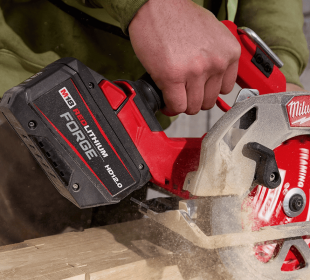
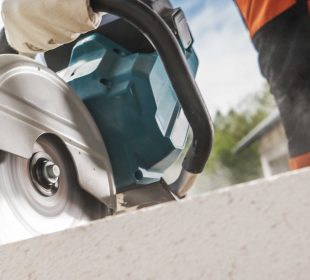
Rotary hammers and jackhammers are the starting point for post holes, small footings and breaking a caliche layer at the bottom of a hole you’ve already started. TRS rents a 7-pound rotary hammer, Bosch electric jackhammers in 35-pound and 65-pound sizes and a 40-pound air jackhammer. Break up the layer, clear the pieces and keep going. Our jackhammer comparison explains how the sizes differ.
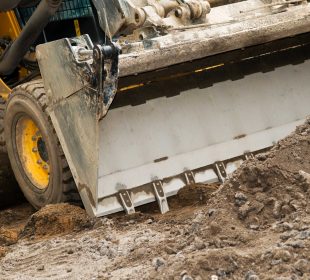
A skid steer with an auger drills post holes quickly in softer caliche. Very hard layers can stall an auger, so a common approach is to auger down until you hit the hard layer, break it with a jackhammer and then finish with the auger. TRS offers auger bits through our skid steer attachments lineup.
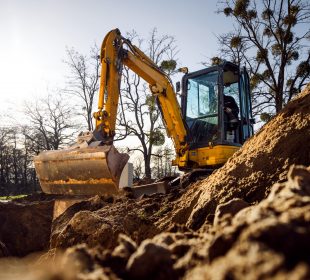
A mini excavator is the workhorse for trenches, footings and planting pits. The bucket teeth concentrate force on a small area, which lets the machine pry caliche apart in chunks. TRS rents the Caterpillar 301.7D and Yanmar ViO17, both 39 inches wide with a 7-foot dig depth, which fit through many backyard gates. For bigger digs, the Yanmar ViO35 reaches about 10 feet. See our excavator rentals for details.
A hydraulic breaker is the answer when caliche is too hard to dig. It mounts to the machine and hammers the layer apart so the bucket can scoop it out. TRS rents hydraulic breakers for skid steers. Ask our team which breaker options fit the machine you’re renting.
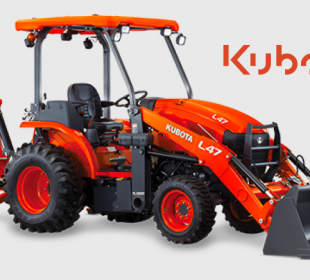
A backhoe like the Kubota L47 brings more weight and about 10 feet of dig depth, plus a front loader to move the broken material. It’s a good fit for open properties with a lot of digging. Our backhoe rental page has the full specs.
A walk-behind trencher like the Ditch Witch C16X digs 24 inches deep with a 4-inch cut and is fast for irrigation and low-voltage lines in typical soil. Hard caliche can slow the chain or stop it entirely, so if you already know there’s caliche on the property, call us before you rent and we’ll help you decide between a trencher and a mini excavator.
Which equipment fits common caliche jobs?
| Job | Best rental | Notes |
| A few post holes | Rotary hammer or jackhammer plus a digging bar | Soaking first can help with softer caliche |
| Many fence post holes | Skid steer with auger | Break hard layers with a jackhammer |
| Planting holes for trees | Mini excavator | Dig through the layer for drainage |
| Irrigation or utility trench | Mini excavator or trencher | Trencher works only in softer caliche |
| Footings for a wall or patio cover | Mini excavator | Add a breaker for hard layers |
| Large dig on an open lot | Backhoe | Loader helps move broken material |
| Very hard caliche | Hydraulic breaker | Breaks the layer so a bucket can remove it |
How should you plant trees in caliche?
Drainage is the big issue. If you dig a planting hole into caliche without breaking through it, the hole fills with water every time you irrigate and the roots can rot. The usual fix is to dig through the caliche layer to the softer soil below. If the layer is too thick for that, break a narrow drainage channel, sometimes called a chimney, down through it and backfill with native soil.
Test drainage before you plant by filling the hole with water. If it hasn’t drained after several hours, keep breaking through. The University of Arizona Cooperative Extension in Pima County offers more local planting guidance.
What should you do before digging through caliche?
Contact Arizona 811 at least two working days before you dig so underground utilities can be marked. This is especially important with caliche, because breaking hard ground with a jackhammer or breaker can do serious damage to a buried line before you ever see it.
Breaking caliche throws chips and dust, so wear eye protection, hearing protection, gloves and a properly fitted respirator. Plan heavy work for early morning, since running a jackhammer in Tucson afternoon heat is exhausting. TRS opens at 6:30 AM, so you can pick up equipment and get going while it’s still cool.
Build extra time into your schedule, too. Caliche can turn a one-day dig into a two- or three-day dig. A weekly rental is often the better value once you’re past a couple of days, and a Friday afternoon pickup returned Monday morning counts as a one-day charge at TRS.
How do you rent equipment for caliche from TRS?
Call 520-744-6333 or request a quote online. Tell the team what you’re digging, how deep you need to go and what you’ve found so far, and they’ll help you choose the right machine and attachments. TRS has no deposit and no reservation fees, and delivery is available throughout Tucson and rural Southern Arizona.
TRS Equipment Rental is at 7255 N. Camino de Oeste near Ina Road and I-10, open Monday through Friday from 6:30 AM to 3:00 PM. Our guide on what size excavator you need is a good next read if you’re leaning toward a mini excavator.
Frequently Asked Questions
Can a mini excavator dig through caliche?
In most cases, yes. A mini excavator with a toothed bucket can pry apart soft to moderately hard caliche. For very hard layers, a hydraulic breaker breaks the caliche first so the bucket can remove it.
How deep is caliche in Tucson?
It varies by property. Caliche can start just a few inches below the surface or several feet down, and the layer can range from a few inches to several feet thick.
Is caliche the same as hardpan?
They’re related. Hardpan is a general term for any dense, compacted soil layer. Caliche is a specific type cemented by calcium carbonate, common in desert regions like Southern Arizona.
Should I remove caliche or dig through it?
For most projects, you only need to dig through it where you’re working, such as post holes, footings, trenches and planting pits. Removing caliche across an entire yard is rarely necessary.
Can I reuse broken caliche as backfill?
Broken caliche chunks don’t compact evenly, so screen out large pieces before backfilling. For anything structural, such as footings or slabs, follow your plans or bring in suitable fill.